EmbeddingGemma 2: Google DeepMind's New Leap and Architectural Implications for Developers
Google DeepMind has just unveiled EmbeddingGemma 2, a compact yet powerful embedding model. This article delves into its architecture, analyzes potential applications, and highlights key considerations for developers.
Nguyễn Mạnh Quý
Vạn vật thay đổi Vật chất lên ngôi
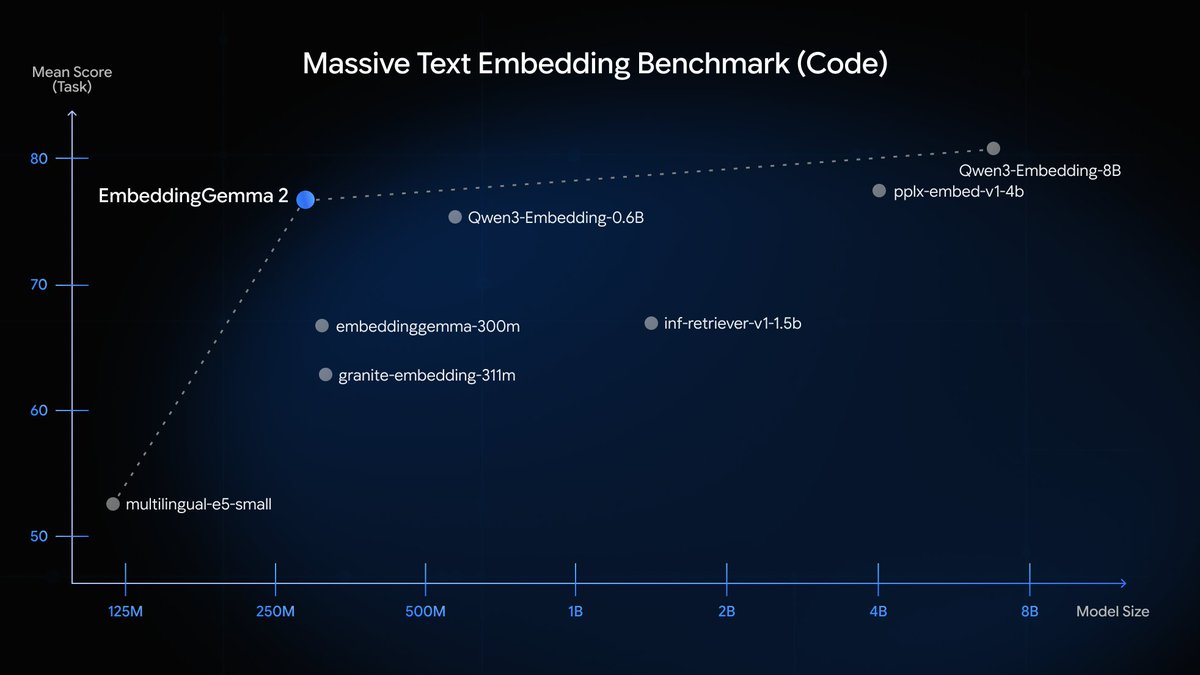
EmbeddingGemma 2: Miniaturized Power from Google DeepMind
Google DeepMind has just announced EmbeddingGemma 2, an embedding model with 740 million parameters. Remarkably, its performance can compete with, and even surpass, specialized models twice its size. This marks a significant step forward in optimizing performance on limited resources.
Value for Developers:
- Multimodal Search Integration: EmbeddingGemma 2 unlocks the ability to add intelligent search features to applications. Imagine users searching for a specific moment in a video using only a voice recording. This is a significant advantage for developing innovative applications, especially in media and entertainment.
- Combination with Gemma 4 for On-device RAG: The ability to combine EmbeddingGemma 2 with Gemma 4 enables the creation of Retrieval Augmented Generation (RAG) systems that operate privately and directly on the user's device. This is crucial for applications requiring high security or needing to function offline. Mobile or desktop application developers can leverage this to enhance user experience without concerns about transmitting sensitive data to servers.
- Apache 2.0 License: Releasing under the Apache 2.0 license provides maximum flexibility for developers and businesses. They can freely use, modify, and distribute the model, fostering innovation and broader adoption.
The model's availability on Hugging Face and Kaggle also makes it easier for developers to access, experiment with, and integrate into their projects.
Anthropic and its Commitment to Supporting Startups: A Strategic Move
Anthropic is making a notable move by offering one year of free Claude Team service and $1,000 in credits to startups. The company's statement emphasizes its belief that the benefits of AI will reach users through companies building applications based on models, rather than solely through the AI models themselves.

Value for Developers:
- Opportunity to Access Advanced AI Technology: This is a golden opportunity for startups, especially those with limited resources. Free access to Claude Team for a year helps them save significant costs while enabling them to build and test groundbreaking AI products.
- Fostering the AI Ecosystem: This move by Anthropic demonstrates a serious investment in building a robust ecosystem around their models. Developers will be more motivated to create innovative solutions, knowing they have support from the model provider.
- Focus on Practical Applications: Anthropic's statement clearly directs focus towards solving real-world business problems through applications. This means developers should concentrate on creating value for end-users, rather than merely chasing new technology.
For engineering teams looking to integrate AI into their products, now is a good time to explore Claude and the capabilities it offers.
LibreOffice and the "No AI by Default" Stance: A Privacy Lesson
In another development, LibreOffice declared "no AI" as a new software feature. The developer of this open-source document editor stated that they have no plans to integrate AI into the software's default configuration, citing user privacy as the core reason.

Value for Developers:
- Prioritizing User Privacy: LibreOffice's decision is a strong reminder of the importance of privacy in product design. Developers need to carefully consider how user data is collected, processed, and used, especially when integrating AI features that may access or analyze sensitive data.
- Security-Focused Architectural Design: For AI systems, implementing AI features in a privacy-respecting manner is essential. This can include on-device data processing, using robust encryption techniques, or providing users with granular control over their data.
- Distinguishing Between Optional and Default AI: Offering AI features as an opt-in/opt-out choice rather than by default is a smart approach. This allows users to choose their level of engagement with AI, minimizing privacy risks and enhancing trust.
In the context of increasingly powerful AI models, developers adopting a cautious approach and prioritizing privacy, like LibreOffice, is commendable and worth learning from.
Conclusion: Leveraging AI Responsibly
The world of AI is evolving at a breakneck pace. Google DeepMind, with EmbeddingGemma 2, demonstrates the ability to miniaturize computational power, opening new doors for intelligent and private on-device applications. Anthropic, in turn, showcases a strategic vision for ecosystem building, supporting young innovators. Conversely, LibreOffice issues a cautionary reminder about the unchanging importance of user privacy.
As system builders and product developers, we need to:
- Experiment with EmbeddingGemma 2: Explore how to integrate multimodal search capabilities or on-device RAG into current projects. Pay attention to resource and performance requirements during deployment.
- Evaluate AI Support Programs: Monitor and leverage opportunities from major model providers like Anthropic to accelerate product development.
- Always Prioritize Privacy: When designing any AI-related feature, ask yourself: How is user data being protected? Are there ways to minimize the collection of sensitive data? Is this AI feature truly necessary and does it provide value that outweighs potential risks?
Balancing the exploitation of AI's power with responsibility towards users will shape the future of technology.